Engage Remote Teams with Interactive Hybrid Holiday Event Ideas

Key Highlights
-
Hybrid events are not about livestreams they're about shared participation
-
Remote attendees should feel like contributors, not spectators
-
True hybrid design builds two intentional experiences with one digital bridge
-
Online play fuels connection, structure, and shared fun
-
Mobile-first tools help unify remote and in-person engagement with ease
The Holiday Party Is Back… But Not Everyone’s in the Room
The return of in-person holiday events brings a welcome wave of energy. Offices are buzzing again, venues are being booked, and catering orders are coming back to life. These parties are more than just food and decorations they're symbolic milestones of culture, connection, and appreciation.

But what about the colleagues who aren't physically present?
In the modern workplace, it's increasingly rare to have every team member under one roof. Hybrid teams spanning cities, countries, or even continents are now the norm. And that raises a vital question: how do we make remote team members feel equally celebrated?
Too often, the default solution is a camera on a tripod and a link to a live stream. But watching people laugh, dance, and mingle isn’t the same as being part of the moment. Remote attendees end up feeling like passive spectators, rather than meaningful participants. To create a holiday event that truly includes everyone, you need to rethink what "hybrid" means. It’s not about duplicating a party it’s about designing a shared experience that respects different formats while creating the same emotional payoff.
One Event, Two Intentional Experiences
The core of hybrid success is mindset. Think of it not as “one party, two versions,” but as one celebration delivered via two custom-built paths, each optimized for its format and connected through real-time interaction. In-person guests enjoy venue energy decor, music, catering, and casual encounters. Remote guests, however, need a designed experience with equal purpose and energy, crafted for digital participation. That means shifting from “streaming the room” to creating shared touchpoints activities, interactions, and visuals that flow naturally across both audiences. These could be interactive games, live polls, gratitude walls, or trivia competitions, all accessible via browser or mobile.
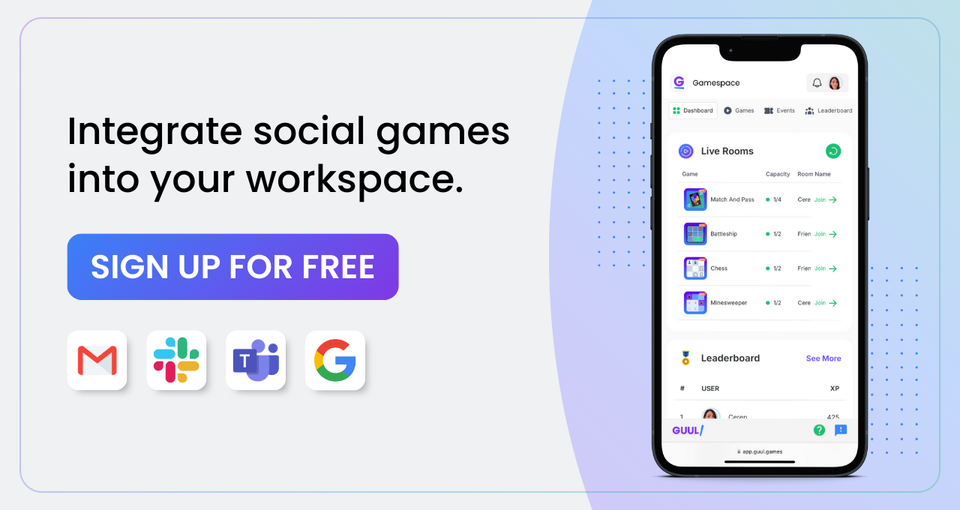
For example, browser-based platforms such as Guul make it possible to unify remote and on-site play without friction. Guests click a link to join no downloads required. Once in, they can play, chat, upload, and compete together in the same digital space.
The takeaway: Hybrid isn’t a compromise it’s an upgraded form of inclusivity.
Why Hybrid Holiday Events Are Worth It
While hybrid event planning can feel like extra effort, the outcomes often outperform both in-person and fully virtual experiences. Here's why:
1. Expanded Reach
Hybrid formats remove geographic barriers. No matter where your employees live, they can join the fun. This opens the door for global offices, freelancers, remote hires, and hybrid schedules to share one celebration.
2. Increased Participation
Digital components make it easier to engage more people. Whether they're playing games on their phones, submitting shoutouts, or reacting in chat, participation is no longer limited by physical presence.

3. Better Data & Feedback
Online interactions create measurable data: who played, who submitted content, what people loved most. This helps improve future events with real insights, not guesses.
4. Flexibility & On-Demand Value
Hybrid events can be recorded or extended people can revisit shared content, watch highlight reels, or even contribute after the live moment ends.
5. More Inclusive Culture
Hybrid structures show commitment to inclusion. They communicate that everyone matters whether they're five feet or five thousand miles away.
3 Hybrid Event Ideas That Actually Work
Below are three interactive formats that unify remote and in-person attendees through shared experiences, not just shared screens.
1. Company Predictions Game
Theme: “What’s Coming in 2026?”
This lighthearted, forward-looking activity invites creativity, laughter, and friendly competition.
-
In-Person: Guests at tables become mini-teams. Each scans a QR code, discusses playful or serious predictions (e.g., “Will we launch a new product?” “Who’s next to relocate?”), and submits them via a browser.
-
Remote: Colleagues form virtual rooms, chat on video, and submit their predictions through the same platform.
-
Unifying Element: A live leaderboard is displayed on a screen at the party and on a shared link for virtual guests. As answers come in, the board updates in real time, with the funniest or most accurate predictions earning points.
This creates excitement in both spaces, with everyone focused on the same moment even if they’re not in the same room.
2. Trivia Battle: Office vs. Remote
Theme: “Clash of the Locations”
Trivia has always been a crowd favorite and hybrid trivia takes it to the next level.
-
In-Person: A trivia host reads questions aloud. Guests answer from their phones, forming small teams.
-
Remote: A virtual host shares the same questions on a video call, with participants answering live on their own devices.
-
Unifying Element: The system groups responses into “Team Office” and “Team Remote,” with points tracked live on a digital board. This friendly rivalry adds laughter and banter.
Bonus twist: Add wildcard rounds like “Guess the Baby Photo” or “Holiday Song Emoji Decode” for some extra fun.
3. Gratitude Wall & Photo Mosaic
Theme: “One Team, Many Perspectives”
Visual participation is often underestimated. But a digital gratitude wall brings warmth, emotion, and unity in a single shared space.
-
In-Person: Guests scan a QR code and upload selfies, thanks, or quick shoutouts throughout the event.
-
Remote: Participants share screenshots, team photos, or pre-recorded messages.
-
Unifying Element: All content appears on a live digital wall displayed at the venue and on the remote stream. Over time, it becomes a mosaic of faces, moments, and messages from across the company.
It’s an inclusive, low-pressure way for everyone to contribute no matter their timezone or setting.
Tech and Logistics: Getting Hybrid Right
No matter how creative your plan is, smooth logistics are the backbone of a successful hybrid event. Here’s what to prioritize:
A Dedicated Remote Host

Just like in-person events need an MC, so do virtual experiences. A friendly, energetic remote host can make remote attendees feel guided, acknowledged, and part of the fun.
They can explain how games work, engage the chat, announce scores, and react in real time to what's happening at the main venue.
Simplified Participation
Avoid tech fatigue. People shouldn’t have to download software or create accounts just to join in. That’s why browser-based, mobile-ready platforms are ideal. Guul, for instance, is used by hybrid teams because it opens directly in any browser, works on phones or laptops, and lets attendees instantly play or post content.
The easier it is to join, the more inclusive the experience becomes.
Stable Connectivity and Setup
Technical glitches are the fastest way to lose momentum. Make sure: Wi-Fi is tested and reliable
-
Leaderboards or game platforms are preloaded and rehearsed
-
You have a backup hotspot if needed
-
AV and screen sharing tools work for both in-person and remote visuals
Also, set up your physical space to visually include remote participants show their faces on a screen, reference them by name, and let in-person attendees “see” them.
Clear Roles and Flow
Hybrid events involve more moving parts than either in-person or fully virtual events. Assign clear roles:
-
Onsite coordinator
-
Remote host/moderator
-
Tech support lead
-
Game/activity lead
-
Photographer or content collector
Have a timeline for both tracks that includes synchronized moments. A well-planned flow ensures both groups stay connected emotionally and logistically.
Key Takeaways
-
Hybrid holiday parties should offer interaction, not just access
-
Two distinct paths remote and in-person can create one powerful shared event
-
Online play creates the structure for unifying moments
-
Browser-based tools make participation easy for everyone
-
Emotional connection comes from inclusion, not perfection
-
A simple idea like a gratitude wall can mean more than a thousand decorations
-
Plan ahead, rehearse, and assign clear roles to reduce stress and maximize connection
Frequently Asked Questions
1-How can we ensure remote attendees don’t feel left out during a hybrid party?
Give them more than just a livestream. Assign a dedicated remote host, plan interactive games, and use shared elements like photo walls or live leaderboards. When remote guests see their contributions reflected in real-time, they feel truly part of the celebration.
2-Do we need two separate programs for remote and in-person attendees?
Not at all. Build one event with two experiences aligned by shared moments like trivia, polls, or gratitude walls. Tailor delivery for each audience, but keep the spirit and structure unified.
3-What’s the easiest way to include remote workers without overwhelming the planning team?
Use one platform that supports both formats without downloads or complexity. Assign clear roles (e.g., remote host, tech lead), and stick to simple, scalable formats. A well-chosen tool reduces setup while maximizing participation.
4-Should we hire a virtual host or use someone from the team?
Either can work. A professional brings polish; an internal team member brings authenticity. Choose someone who’s confident, engaging, and understands how to connect with a virtual audience.
5-How do we measure if our hybrid event was a success?
Ask attendees what made them feel included on both sides. Track participation in games, polls, or shared walls. When people from every location feel seen, involved, and appreciated, you’ve succeeded.